


 Tours
ToursScotland harbors some of the most distinct and safeguarded locations worldwide. These sites possess the capacity to alter the manner in which we all perceive, encounter, and comprehend the surrounding world.
In honor of these remarkable sites, VisitScotland and UNESCO have partnered to establish the world’s inaugural digital UNESCO Trail. There are 1092 sites acknowledged by UNESCO worldwide, and Scotland lays claim to 13 of these (quite an impressive feat given Scotland’s modest dimensions, we must say!).
Today, we’re sharing a few of them with you in this blog article.
1 : Forth Bridge

This railway bridge traverses the Floth river’s estuary, connecting the Edimbourg region with the Fife area. It was inaugurated in 1890 and boasts the world’s lengthiest spans at 541 meters. The bridge stands as one of the globe’s lengthiest cantilevers. Its daily operations facilitate the movement of both passengers and freight. Distinguished by its innovative design, choice of materials, and impressive scale, the bridge exemplifies a significant paradigm in the conception and construction of bridges overall.
2 : St Kilda

Archipelago consisting of distant isles abandoned since 1930 due to harsh weather and scarcity of sustenance. These lands serve as a sanctuary for marine avian species such as the Northern Gannet (the world’s second-largest colony, only surpassed by the Bass Island in Northern Scotland), along with petrels and Atlantic Puffins. St. Kilda also harbors two distinct sheep breeds. During the summer, volunteers engage in restoring numerous dilapidated structures left behind by past inhabitants, coexisting with a modest military outpost established in 1957.
3 :The old city and the new Edimburg city

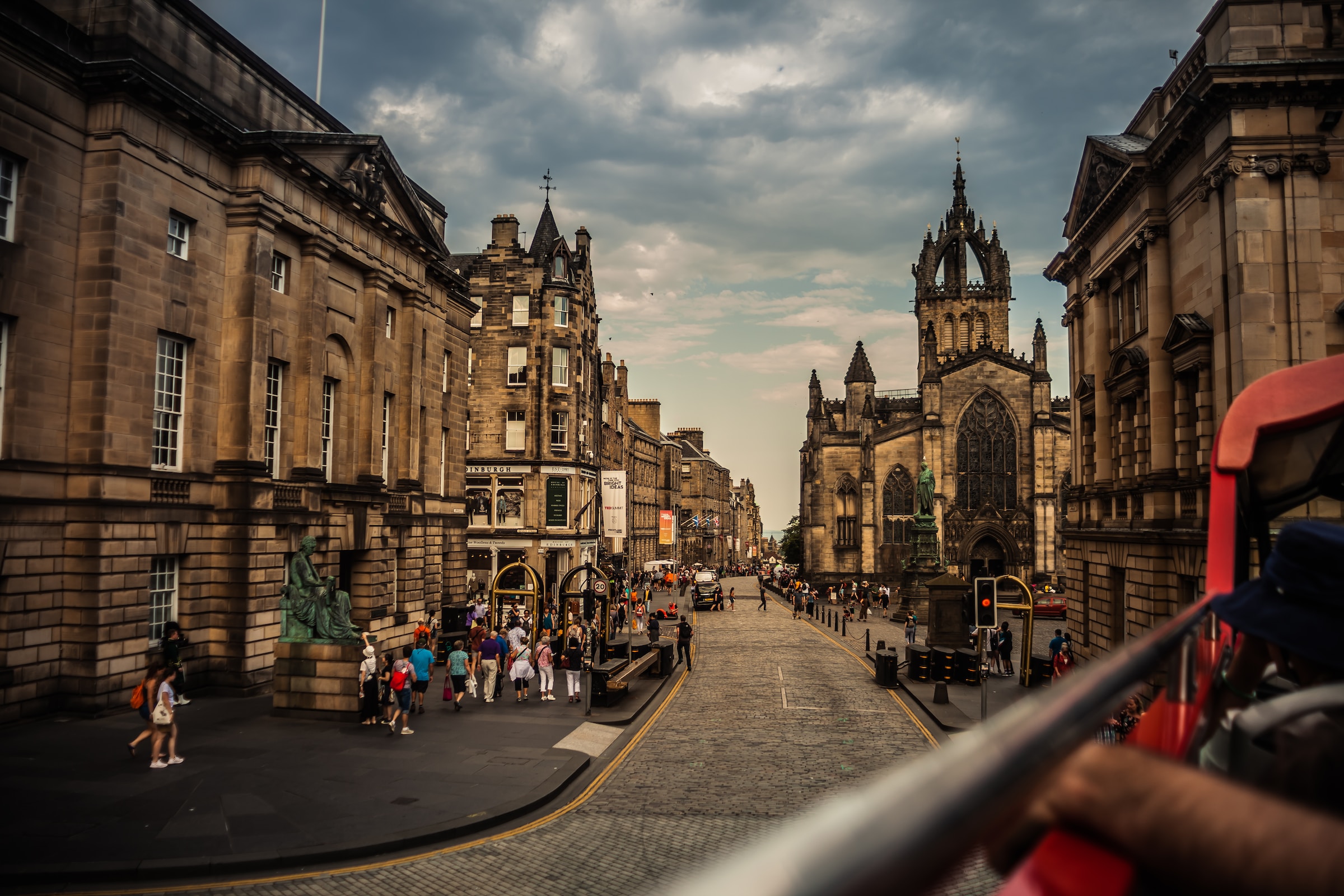
The capital of Scotland from the 15th century onwards has been Edinburgh. It consists of the ancient city core, which is centered around a medieval fortress, followed by a newer Georgian neoclassical area that emerged during the 18th century. This transformation greatly contributed to European Urbanism. The cohesive coexistence of these divergent sections is marked by impressive architectural diversity and historical significance, collectively bestowing a distinctive identity upon this city.
4 : The Orkney Islands

The cluster of ancient Neolithic structures includes a significant burial mound featuring funeral chambers (Maes Hawe), a pair of ritual stone circles (Stenness arranged stones and Brodgar circle), which holds significance in its settlement history (Skara Brae). Additionally, there are several unexplored burial grounds, ceremonial locations, and settlements still awaiting excavation. Collectively, these elements form a noteworthy cultural environment. Within this island group, one can find 2 distilleries: Scapa and Highland Park.
Of course, there are many others !

